
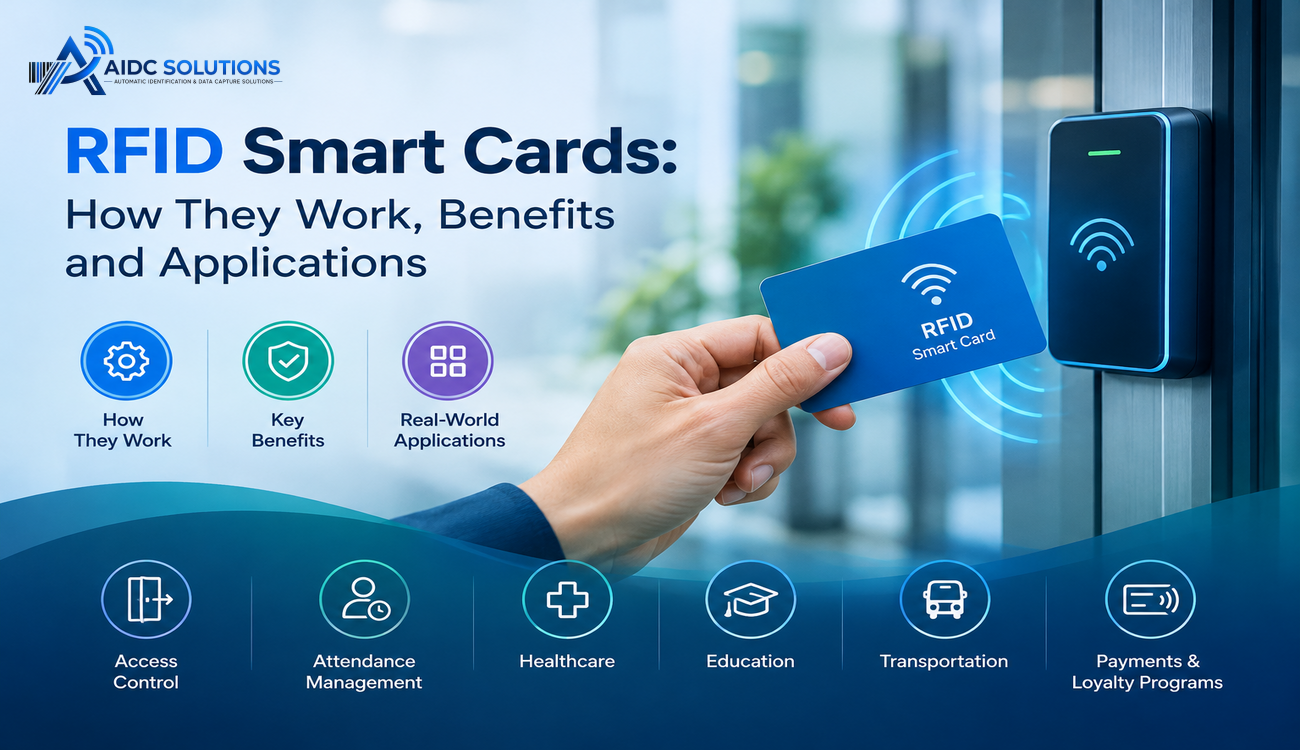
Businesses, educational institutions, healthcare organizations, and government agencies are increasingly adopting contactless technologies to improve security, simplify identification, and make everyday operations more efficient. From employee access cards and public transportation passes to secure payment systems, smart cards have become an important part of modern digital infrastructure. Among these technologies, RFID Smart Cards offer a convenient way to identify people, authenticate access, and exchange information without requiring direct physical contact with a reader.
Traditional identification methods often involve manual verification, magnetic stripe systems, or barcode scanning. Although these methods remain useful in many situations, they can require precise positioning, repeated handling, or additional steps to complete a transaction. Radio Frequency Identification (RFID) technology addresses some of these limitations by enabling wireless communication between a card and a compatible reader.
Organizations can use RFID-based systems to streamline access control, manage attendance, improve asset tracking, and support contactless services. Understanding how this technology works, its advantages, and its practical applications can help businesses determine where it can deliver the greatest value.
What are RFID Smart Cards?
RFID Smart Cards are contactless cards that use radio frequency signals to communicate with compatible readers. They generally contain an embedded antenna and an RFID chip that stores identification information or other authorized data. When the card enters the reader’s operating range, the reader communicates with the chip to retrieve the information required for identification or authentication.
Depending on their design, these cards may be used for employee identification, building access, transportation systems, membership programs, and other applications that require convenient contactless interactions.
Some RFID cards contain only basic identification information, while others work with secure systems that perform additional authentication and verification. The specific capabilities depend on the card technology, frequency, chip, security configuration, and supporting software.
Unlike ordinary printed identification cards, RFID-enabled cards can communicate electronically with compatible systems. This makes them useful for organizations seeking to reduce manual verification and improve the efficiency of routine operations.
How Do RFID Smart Cards Work?
Understanding the RFID Communication Process
The working principle of RFID technology involves a card, a reader, and a system that processes the information received from the card. Each component performs a specific role in completing an identification or authentication request.
When a card is brought within the reader’s supported range, the reader generates a radio frequency field or sends a radio signal, depending on the system design. A passive RFID card uses energy from the reader’s field to power its chip and respond with the information needed for the transaction.
The reader receives the card’s response and forwards the relevant data to an access control platform, attendance application, payment system, or other connected software. The system then checks the information against its configured rules and determines whether the requested action should be permitted.
For example, when an employee presents a card at an office entrance, the reader captures the card’s identifier and sends it to the access control system. If the employee has valid permissions for that door and time, the system can authorize entry.
This process can happen quickly, allowing users to complete everyday tasks without inserting a card into a slot or scanning a printed code.
Passive, Active and Battery-Assisted RFID Cards
RFID systems differ in how their tags or cards receive power and communicate with readers. Passive cards do not contain their own battery and typically rely on energy supplied by the reader. They are widely used for short-range identification and access applications because their designs can be compact and economical.
Active RFID devices contain a battery and can transmit signals over longer distances, depending on their design. They are more common in applications such as tracking certain assets or monitoring moving objects than in ordinary access cards.
Battery-assisted passive devices use a battery to power internal circuitry while communicating through a reader’s radio field. Their use depends on the requirements of the application.
For most employee access and identification systems, passive contactless cards are a practical option because they can operate without regular battery replacement.
RFID Frequencies and Reading Range
RFID systems operate at different frequency ranges, and the selected frequency affects communication distance, data transfer characteristics, and the suitability of the technology for a particular environment.
Low-frequency systems commonly operate around 125–134 kHz and are used in certain identification and access control applications. High-frequency RFID operates at 13.56 MHz and includes technologies used in contactless smart cards and near-field communication applications.
Ultra-high-frequency RFID commonly operates in regional bands around 860–960 MHz and is frequently used for inventory, logistics, and supply chain identification. However, UHF technology is not interchangeable with every conventional contactless access card system.
Reading distance depends on the card, reader, antenna, environment, and system configuration. Businesses should select compatible cards and readers based on their actual operational requirements rather than assuming every RFID card works with every reader.
Key Benefits of RFID Smart Cards
Faster and More Convenient Identification
One of the main benefits of RFID technology is that users can present a card near a compatible reader without making direct electrical contact. This reduces the need for inserting cards into devices or carefully aligning printed barcodes with scanners.
In workplaces, employees can use contactless cards to access authorized areas, record attendance, or authenticate themselves at compatible terminals. The reduced number of manual steps can help improve the overall user experience, particularly in environments with frequent card interactions.
Improved Access Control and Security
RFID-based access control systems allow organizations to assign permissions according to user roles, locations, schedules, and other predefined rules. When an employee leaves the organization or loses a card, administrators can disable the associated credentials through the supporting system.
More advanced smart card technologies can support cryptographic authentication and secure communication. These features can help protect against unauthorized credential use when implemented correctly.
However, not all RFID cards provide the same level of security. Some basic systems rely on identifiers that may be copied or replayed, so organizations should evaluate card security, reader capabilities, encryption, and authentication requirements before deployment.
Reduced Manual Work and Administrative Effort
Automating identification and attendance processes can reduce the workload associated with paper registers, manual entry, and repetitive verification. When connected with HR software or other business applications, an RFID system can transfer relevant event data into existing workflows.
For example, a company can integrate employee card readers with its attendance management platform to record entry and exit events automatically. Administrators can then review attendance records without manually collecting information from each department.
The amount of administrative effort saved depends on the quality of the integration and the procedures used to manage exceptions.
Better Operational Visibility
RFID systems can generate digital records of authorized card interactions, helping organizations understand how their facilities and services are being used. Depending on the system, these records may support attendance reporting, access audits, and operational analysis.
When the data is integrated with centralized dashboards, managers can review activity patterns and identify opportunities to improve workflows. Organizations must still apply appropriate privacy policies and access controls to ensure that these records are used responsibly.
Long-Term Cost Efficiency
Although implementing an RFID system involves initial costs for cards, readers, software, installation, and integration, it can reduce some recurring administrative expenses over time. Contactless cards generally do not require physical contact with the reader, which can help reduce wear associated with certain mechanical card-reading systems.
The total cost depends on the number of users, card technology, security requirements, maintenance, and system complexity. Businesses should assess both initial investment and ongoing operating expenses before choosing a solution.
Major Applications of RFID Smart Cards
Employee Identification and Attendance Management
Organizations use RFID-enabled employee cards to simplify identification and record attendance events. Employees can present their cards at compatible readers installed at entrances, office floors, or designated attendance points.
When integrated with HR and payroll systems, attendance records can support reporting and administrative workflows. Businesses should establish clear procedures for missed scans, shift changes, lost cards, and other exceptions to maintain accurate records.
Office and Building Access Control
RFID-based cards are widely used to control entry into offices, laboratories, data centers, warehouses, and other restricted facilities. Administrators can configure access permissions for specific employees, departments, or locations.
If an employee’s responsibilities change, access permissions can be updated centrally. Lost or compromised credentials can also be revoked, provided the access system supports the relevant management functions.
For sensitive areas, organizations may combine RFID cards with PINs, biometrics, or other authentication methods to provide additional protection.
Healthcare and Hospital Management
Hospitals and healthcare facilities can use RFID-enabled cards for staff identification, controlled access, and certain patient administration workflows. Authorized personnel may use cards to access designated departments or authenticate themselves at compatible workstations.
In healthcare environments, system design must account for patient privacy, sensitive information, emergency access, and regulatory requirements. An RFID card should not be treated as a substitute for the broader identity verification and information security controls required for clinical systems.
Educational Institutions and Campus Services
Schools, colleges, and universities can use RFID cards for student identification, library services, attendance recording, and access to authorized campus facilities. A single card may support several services when the systems are integrated and the card technology is compatible.
For example, students may use their cards to enter designated facilities or borrow library materials through a supported system. Centralized management can simplify credential issuance, replacement, and access updates.
Educational institutions should also consider appropriate consent, privacy, and data retention practices when collecting student activity records.
Public Transportation and Contactless Services
Contactless smart cards are used in many transportation systems to support passenger identification, fare validation, and access to transit services. Passengers can present compatible cards to readers at gates or onboard terminals, allowing transactions to be processed efficiently.
The card may store relevant information or use a secure identifier linked to a back-end account, depending on the system architecture. Fare calculation, balance management, and transaction validation are handled according to the transport operator’s implementation.
Membership and Customer Loyalty Programs
Gyms, clubs, libraries, and other membership-based organizations can issue RFID cards to identify registered users and provide access to eligible services. When integrated with membership databases, these cards can help staff verify membership status and record relevant interactions.
Businesses may also use contactless credentials to support loyalty programs or streamline customer service, provided that the selected card and reader technologies meet the application’s requirements.
How to Choose the Right RFID Smart Card System
Identify Your Business Requirements
The first step is to determine the purpose of the system. Employee attendance, building access, transit payments, and secure identity verification can have different technical and security requirements.
Organizations should estimate the number of users, the number of reading locations, the required reading distance, and the type of information the system needs to process.
Evaluate Card Compatibility and Security
Cards and readers must use compatible technologies. Businesses should verify frequency, communication protocols, chip capabilities, and support for the required security features.
For sensitive applications, the evaluation should include authentication mechanisms, cryptographic protection, credential management, and the ability to revoke lost or compromised cards.
Consider Software Integration
The value of an RFID system increases when it can exchange information with existing business applications. Integration with HR platforms, attendance systems, access control software, or enterprise applications can reduce duplicate data entry and simplify administration.
Businesses should confirm that the proposed system supports their current software environment and can accommodate future requirements.
Review Scalability and Total Cost
A suitable system should support expected business growth without requiring a complete replacement. Organizations should compare card costs, reader hardware, installation, software licensing, maintenance, and integration expenses before making a decision.
Best Practices for Implementing RFID Smart Cards
Successful implementation begins with a clear deployment plan and a realistic understanding of the organization’s needs. Businesses should test the selected cards and readers in their actual operating environment before rolling out the system across every location.
Administrators should establish procedures for issuing cards, assigning permissions, replacing lost credentials, revoking access, and maintaining user records. Regular testing and software updates can help maintain reliable operation.
Employees and other cardholders should receive clear instructions on how to use their credentials and report problems. Organizations should also review access logs, restrict access to personal data, and establish appropriate retention policies.
By combining compatible hardware, secure configuration, reliable software, and clear administrative procedures, businesses can build an RFID system that supports everyday operations while reducing unnecessary complexity.
Conclusion
RFID technology has become an important tool for organizations seeking convenient identification, contactless access, and more efficient service delivery. From employee attendance and building security to healthcare, education, and transportation, RFID-enabled cards can support a wide range of business processes.
RFID Smart Cards provide the greatest value when their capabilities match the organization’s requirements and the supporting system is configured correctly. Businesses should evaluate card compatibility, security features, software integration, scalability, and long-term costs before selecting a solution.
With proper planning and implementation, RFID-based systems can help organizations streamline routine activities, improve access management, and create more connected operational environments. As contactless technologies continue to evolve, smart cards will remain a practical option for businesses looking to modernize identification and access workflows.
FAQs
Q1. What are RFID Smart Cards and how do they work?
RFID Smart Cards are contactless cards containing an embedded chip and antenna that communicate with compatible RFID readers using radio frequency signals. When a card enters the reader’s operating range, the system retrieves the required information and verifies the user’s identity or access permissions.
Q2. What are the main benefits of RFID Smart Cards?
RFID Smart Cards offer faster identification, convenient contactless interactions, improved access management, reduced manual work, and better operational efficiency. Depending on the technology used, they can also support secure authentication and integration with attendance, payment, and enterprise management systems.
Q3. Where are RFID Smart Cards commonly used?
RFID Smart Cards are commonly used in offices, hospitals, educational institutions, public transportation systems, hotels, libraries, and membership-based organizations. They support applications such as employee attendance, building access, student identification, contactless payments, and membership verification.
Q4. Are RFID Smart Cards secure for business applications?
RFID Smart Cards can provide strong security when they use appropriate authentication, encryption, and access control mechanisms. However, security varies by card technology. Businesses should choose suitable credentials, protect sensitive data, and implement additional authentication for high-security environments.
Q5. What is the difference between RFID Smart Cards and traditional ID cards?
Traditional ID cards generally display printed information for visual identification, while RFID Smart Cards contain electronic components that communicate with compatible readers. This enables automated identification, contactless access, and integration with digital systems without requiring manual verification for every interaction.