
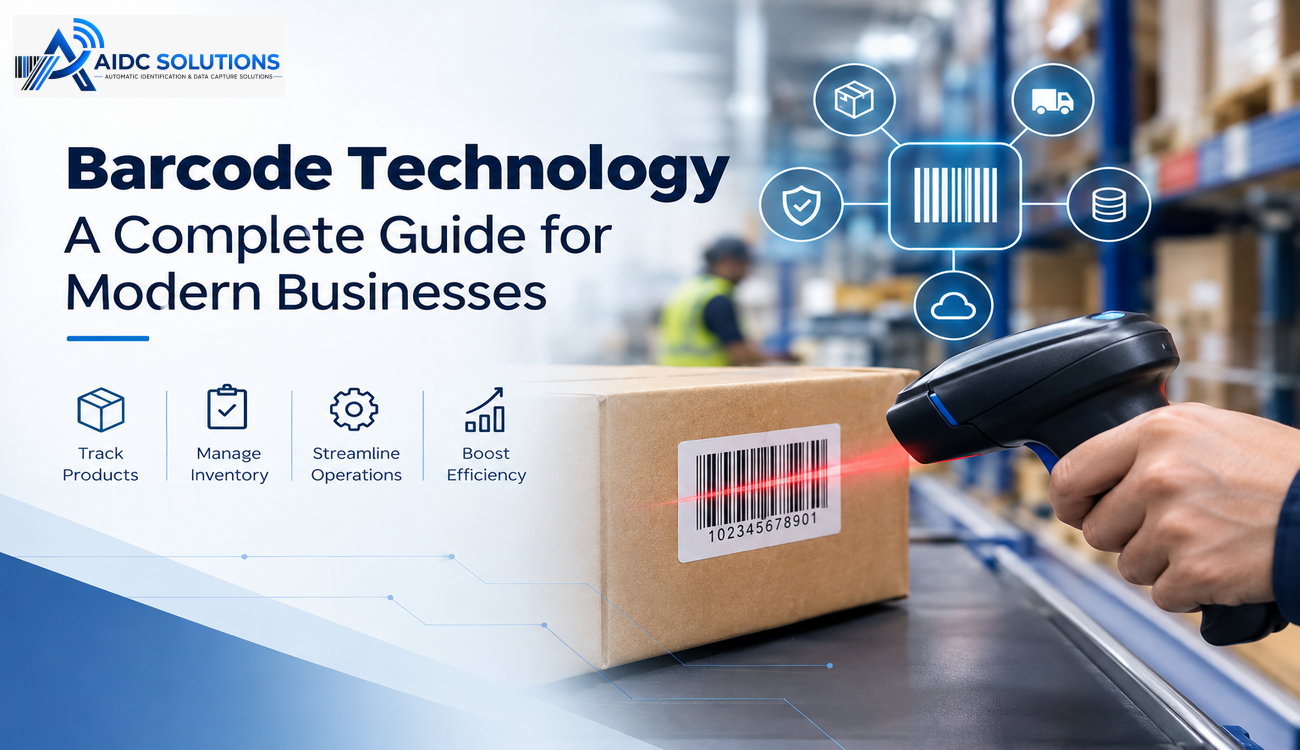
Barcode technology has become one of the most practical tools for businesses that need faster and more accurate ways to identify, track, and manage products, assets, and information. From retail stores and warehouses to manufacturing facilities and healthcare organizations, barcodes help businesses reduce manual work and improve the flow of information across daily operations. As companies continue to focus on efficiency and real-time visibility, Barcode Technology for Business has become an important part of modern inventory and operational management.
Although barcode systems have existed for decades, the technology has evolved significantly. Modern barcode solutions can work with smartphones, handheld scanners, cloud platforms, inventory management software, point-of-sale systems, and enterprise applications. This makes barcode technology useful for organizations of different sizes and industries. Understanding how it works, where it can be used, and what benefits it can deliver can help businesses determine whether barcode solutions are right for their operations.
What is Barcode Technology?
Barcode technology is a method of representing information using a visual pattern that can be scanned and interpreted by a barcode reader. The encoded information may represent a product number, inventory identifier, asset ID, shipment reference, employee record, or another type of business data.
Traditional one-dimensional barcodes use a combination of lines and spaces to store information. Two-dimensional barcodes, such as QR codes and Data Matrix codes, use patterns of squares, dots, or other elements and can store considerably more information.
When a barcode is scanned, the reader captures the encoded pattern and converts it into digital information. That information can then be sent to a connected software system, where it can be used to update inventory records, process transactions, track assets, or trigger other business workflows.
How Does a Barcode System Work?
A typical barcode system consists of several connected components. The barcode itself contains the identification information, while a scanner or camera captures the code. Barcode software interprets the scanned information and transfers it to a database or business application.
For example, when a warehouse employee scans a product before shipping, the barcode scanner reads the product identifier and sends it to the warehouse management system. The software can then update the product status, reduce available inventory, and record the shipment.
This simple interaction can eliminate the need for employees to manually enter product numbers and other information, helping businesses reduce data-entry errors and speed up repetitive processes.
Types of Barcodes Used by Modern Businesses
Different businesses use different barcode formats depending on their requirements. Choosing the right barcode type is important because factors such as data capacity, scanning distance, printing conditions, and available equipment can affect system performance.
One-Dimensional Barcodes
One-dimensional barcodes represent information using vertical lines and spaces. Common examples include Code 39, Code 128, UPC, and EAN. These barcodes are widely used in retail, logistics, manufacturing, and inventory management.
UPC and EAN barcodes are commonly associated with consumer products, while Code 128 is often used for logistics, shipping, and supply chain applications because it can encode a broader range of characters.
Two-Dimensional Barcodes
Two-dimensional barcodes can store more information within a smaller physical area. QR codes and Data Matrix codes are widely used examples.
Businesses can use 2D barcodes to store product information, URLs, serial numbers, batch details, and other data. Since many modern smartphones can scan QR codes directly, 2D barcode systems can also provide convenient customer-facing applications.
Why Barcode Technology for Business Is Important
Businesses generate and process large amounts of information every day. When this information is collected manually, the possibility of mistakes increases and employees spend valuable time performing repetitive tasks. Barcode Technology for Business provides a straightforward way to automate data capture while maintaining a connection between physical products and digital records.
Barcode scanning can help employees identify items quickly without typing long product codes or asset numbers. This improves operational speed while reducing the likelihood of human error.
Improving Inventory Accuracy
Inventory accuracy is essential for businesses that manage physical products. Incorrect stock records can lead to overstocking, stockouts, delayed orders, and unnecessary operational costs.
Barcode systems allow employees to scan products during receiving, storage, picking, packing, and shipping. Each transaction can be recorded in the inventory system, providing businesses with more reliable stock information.
Reducing Manual Data Entry
Manual data entry is time-consuming and can introduce errors into business records. A misplaced digit in a product code or asset number can create problems across an entire workflow.
Barcode scanning replaces much of this manual entry with automated data capture. Employees can scan an item and allow the connected software to retrieve the relevant information automatically.
Increasing Operational Efficiency
Speed is another major advantage of barcode systems. Employees can scan an item in seconds, making barcode technology useful for high-volume operations.
In warehouses, for example, workers can scan products while receiving shipments or preparing customer orders. In retail environments, barcode scanners can quickly identify products and retrieve their prices and details from a point-of-sale system.
Applications of Barcode Technology Across Industries
The flexibility of barcode systems allows them to support many different business processes. While inventory management is one of the most common applications, organizations can use barcode technology for much more than tracking products.
Barcode Technology in Retail
Retail businesses use barcodes to identify products, manage inventory, process sales, and monitor stock movement. When a product is scanned at checkout, the system can retrieve its price and product information while simultaneously updating inventory records.
Barcode systems also help retailers conduct stock counts more efficiently. Instead of manually recording product information, employees can scan items and compare the collected data with inventory records.
Barcode Technology in Warehousing and Logistics
Warehouses handle thousands or even millions of products, making accurate identification extremely important. Barcode technology can support receiving, put-away, picking, packing, shipping, and inventory audits.
When integrated with a warehouse management system, barcode scanning can provide greater visibility into product movement. Employees can identify the exact item they are handling and record its movement within the warehouse.
In logistics, barcodes can also be used to track shipments and packages as they move through different stages of transportation.
Barcode Technology in Manufacturing
Manufacturers can use barcodes to track raw materials, work-in-progress products, finished goods, and production batches. Scanning materials at different production stages helps organizations maintain better records of where items are and how they are being processed.
Barcode systems can also support traceability. If a quality issue occurs, manufacturers can use recorded barcode information to identify affected batches and track their movement through the production process.
Barcode Technology in Healthcare
Healthcare organizations use barcode technology to improve the identification and tracking of medicines, medical supplies, equipment, and patient-related information.
For example, barcode-based medication management can help healthcare staff verify medicines before administration. Barcode tracking can also make it easier for hospitals to monitor medical equipment and manage supplies.
Integrating Barcode Systems With Business Software
A barcode solution becomes significantly more useful when it is integrated with existing business applications. Instead of keeping barcode data separate, businesses can connect scanners and barcode software with inventory management systems, ERP platforms, warehouse management systems, CRM platforms, and point-of-sale applications.
Barcode and Inventory Management Systems
Integration with inventory software allows scanned transactions to update stock information automatically. When an item is received, moved, sold, or shipped, the corresponding inventory record can be updated based on the barcode scan.
This creates a more connected inventory workflow and reduces the need for employees to maintain separate records.
Barcode and ERP Systems
Businesses using ERP platforms can integrate barcode scanning into purchasing, inventory, production, sales, and distribution processes. This allows information captured at the physical location to flow into broader business systems.
Such integration can improve visibility across departments and help decision-makers work with more accurate operational information.
Benefits of Implementing Barcode Technology
The value of barcode systems extends beyond faster scanning. When properly implemented, they can contribute to better data accuracy, improved productivity, lower operational costs, and stronger visibility.
Better Data Accuracy
Automated scanning reduces the risk of errors associated with manually entering numbers. Accurate data helps businesses make better decisions about inventory, purchasing, fulfillment, and operations.
Faster Business Processes
Scanning is generally faster than manually recording product or asset information. This can reduce processing time across activities such as stock counting, receiving, order fulfillment, and checkout.
Lower Operational Costs
By reducing repetitive manual work and preventing avoidable inventory errors, barcode technology can help businesses use their workforce and resources more efficiently.
Better Traceability
Barcode records can provide a history of item movement when scans are captured at different operational stages. This can be valuable for industries where traceability and accountability are important.
Challenges to Consider Before Implementing Barcode Technology
Although barcode technology is relatively straightforward, businesses should consider several factors before deployment. Barcode labels need to remain readable, scanners must be suitable for the working environment, and employees need appropriate training.
Environmental conditions can also affect barcode performance. Dust, moisture, poor printing quality, damaged labels, or insufficient lighting may create scanning problems. Businesses operating in warehouses, factories, or outdoor environments should select equipment and labels designed for those conditions.
Software integration is another important consideration. A barcode system that cannot communicate effectively with existing business applications may create additional manual work instead of reducing it.
Choosing the Right Barcode Solution
The right solution depends on the organization’s operational requirements. Businesses should evaluate the type of information they need to capture, the scanning environment, the number of items being tracked, required scanning distance, software compatibility, and future scalability.
Organizations should also consider whether they need handheld scanners, fixed scanners, mobile devices, industrial-grade equipment, or camera-based scanning. The goal should be to create a barcode workflow that fits naturally into existing operations.
The Future of Barcode Technology for Business
Barcode technology continues to evolve alongside cloud computing, mobile applications, automation, and connected business systems. Modern barcode solutions can support mobile scanning, cloud-based inventory platforms, real-time data synchronization, and advanced analytics.
The growing use of 2D barcodes is also expanding the amount of information businesses can connect to individual products and assets. When combined with other technologies such as RFID, IoT, artificial intelligence, and analytics, barcode systems can become part of a broader digital tracking ecosystem.
However, barcodes remain attractive because they are relatively affordable, easy to deploy, and familiar to employees across many industries. For businesses that need a practical way to improve identification and data capture, Barcode Technology for Business will continue to be an important operational tool.
Conclusion
Barcode technology has developed from a simple product-identification method into an important component of modern business operations. From retail and warehousing to manufacturing, logistics, and healthcare, organizations can use barcode systems to improve inventory accuracy, reduce manual data entry, accelerate workflows, and strengthen traceability.
The greatest value comes when barcode scanning is connected with business software such as inventory management systems, ERP platforms, warehouse management solutions, and point-of-sale applications. With the right implementation strategy, Barcode Technology for Business can provide a practical foundation for more efficient and data-driven operations.
As businesses continue to digitize their processes, barcode technology offers a proven and scalable approach to connecting physical items with digital information. Its simplicity, affordability, and flexibility make it a valuable solution for organizations looking to improve operational efficiency without introducing unnecessary complexity.
FAQs
Q1. What is barcode technology used for in business?
Barcode technology is used to identify, track, and manage products, assets, inventory, shipments, and other business information. It helps organizations automate data capture, improve accuracy, and reduce manual data entry.
Q2. How does barcode technology improve inventory management?
Barcode technology improves inventory management by allowing employees to quickly scan products during receiving, storage, picking, counting, and shipping. This helps maintain more accurate and up-to-date inventory records.
Q3. What are the main benefits of barcode technology for business?
The main benefits of Barcode Technology for Business include improved data accuracy, faster operations, reduced manual work, lower operational costs, better inventory visibility, and improved product traceability.
Q4. Can barcode systems be integrated with ERP and inventory software?
Yes, barcode systems can be integrated with ERP, inventory management, warehouse management, point-of-sale, and other business software. This allows scanned information to automatically update relevant business records.
Q5. What is the difference between 1D and 2D barcodes?
1D barcodes use lines and spaces to encode information and are commonly used for product identification. 2D barcodes, such as QR codes and Data Matrix codes, can store more information in a smaller space and support more advanced business applications.